






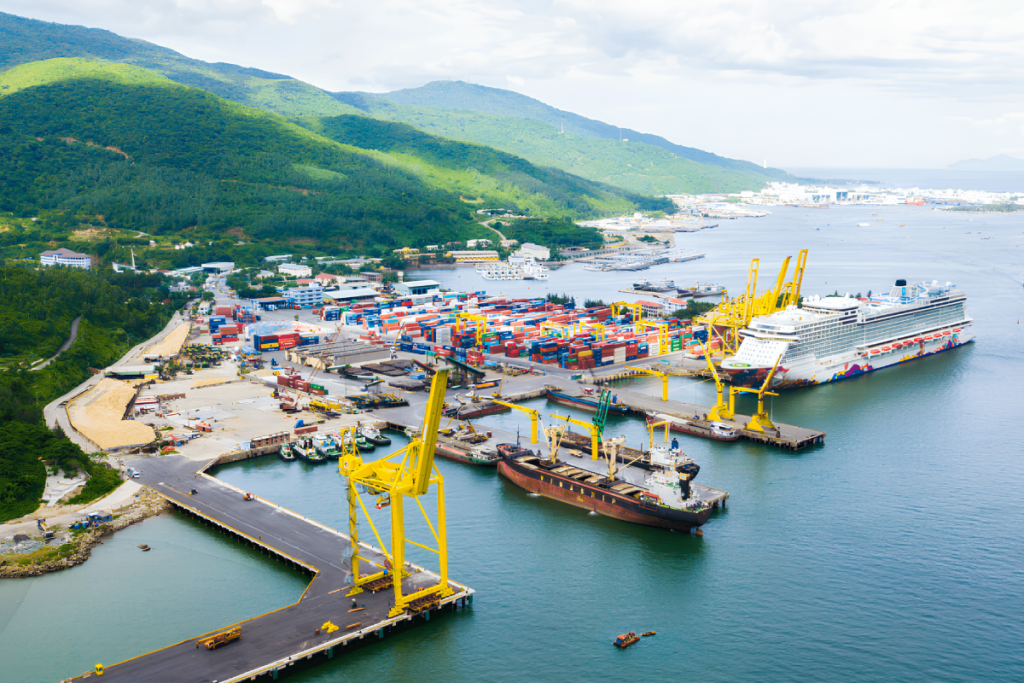
On April 25, the Lien Chieu Container Port project in Da Nang officially broke ground, marking an important milestone in Vietnam’s logistics infrastructure development strategy. The project is expected to strongly promote logistics services, port industries, and urban development in Central Vietnam, while also strengthening Vietnam’s position on international maritime routes.
At the groundbreaking ceremony, government representatives emphasized the port’s role in promoting economic growth alongside national defense and security. With a total investment of approximately VND 45.3 trillion, the project includes 8 container berths with a total length of 2,750 meters and the capability to accommodate vessels up to 18,000 TEUs, making it one of the region’s major deep-water ports.
The scale and direction of the project demonstrate Vietnam’s ongoing efforts to modernize its seaport system in response to growing logistics demand.
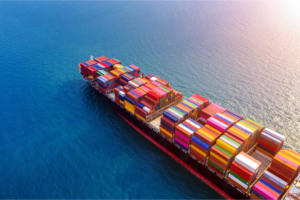
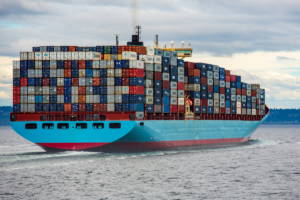
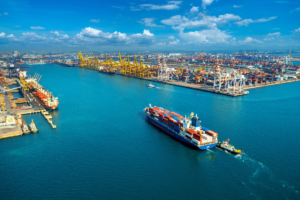
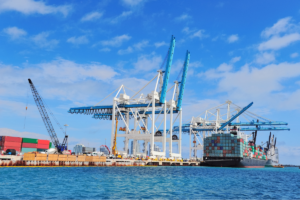
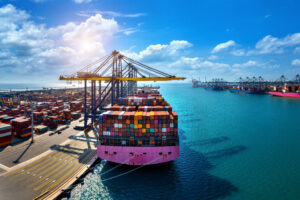
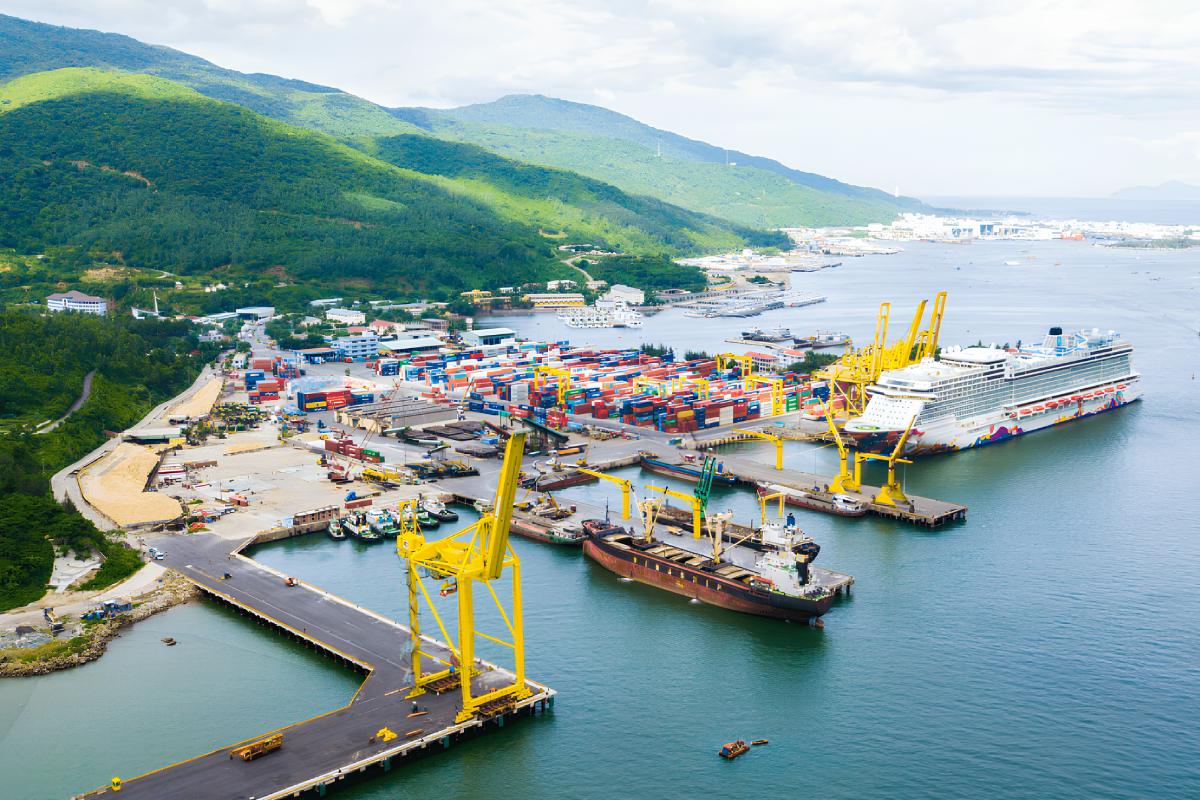 Illustrative image
Lien Chieu – A Strategic Piece in Vietnam’s Port Network
The development of Lien Chieu Port is not only about expanding infrastructure but also about reshaping the role of Central Vietnam within the national logistics chain.
In the future, the port is expected to:
- Reduce congestion at Tien Sa Port
- Receive large container vessels
- Increase cargo handling capacity
- Attract investment into industrial parks and logistics sectors
Once operational, Lien Chieu is expected to become a key transshipment hub connecting domestic and international shipping routes more efficiently.
Impact on Domestic Transportation: The Saigon – Da Nang Route Becomes More Important
The emergence of a large-scale container port in Da Nang will significantly impact domestic transportation structures.
Instead of concentrating cargo flows only between the North and South, goods movement is expected to redistribute, with Central Vietnam becoming a major connection hub.
This will increase transportation demand on routes such as:
- Southern Vietnam → Central Vietnam
- Central Vietnam → Northern Vietnam
- Interregional transportation for manufacturing and import-export activities
Among them, the Phu My / Ho Chi Minh City – Da Nang route will become increasingly important, especially for containerized and bulk cargo serving industrial parks and seaports.
New Logistics Trend: From Standalone Transportation to Integrated Operations
Alongside infrastructure development, expectations for logistics services are also changing.
Businesses now require more than transportation alone. They also need:
- Better cost control throughout the journey
- Reliable delivery schedules
- Reduced transportation risks
- Seamless connections between ports, transportation, and delivery points
This is accelerating the shift toward integrated logistics models, where operational stages are connected as one unified system.
Ngoc Phuoc Logistics – Actively Expanding Central Vietnam Connections
In this context, logistics companies with established transportation routes and operational capabilities will hold clear advantages.
Ngoc Phuoc Logistics is currently operating domestic bulk cargo and container transportation routes, including the Phu My / Ho Chi Minh City – Da Nang route, serving cargo transportation between key economic regions.
With practical operational experience, Ngoc Phuoc Logistics not only handles transportation but also participates in important logistics stages such as:
- Cargo handling and loading at ports
- Lashing and dunnage before transportation
- Transportation coordination based on cargo characteristics
- Flexible connections between ports and delivery points
Managing operations from cargo preparation to transportation helps businesses better control costs, reduce risks, and improve operational efficiency.
Conclusion
The groundbreaking of Lien Chieu Port not only expands infrastructure capacity but also creates important changes in Vietnam’s logistics structure. As Central Vietnam gradually becomes a new logistics hub, domestic transportation routes, especially the Saigon – Da Nang route, will play an increasingly important role in the supply chain.
In this context, businesses need to adapt proactively and choose logistics partners with practical operational capabilities and flexible deployment capacity.
Companies with established transportation routes and operational experience, such as Ngoc Phuoc Logistics, will become important connectors helping businesses optimize costs and improve supply chain efficiency in the next development phase.